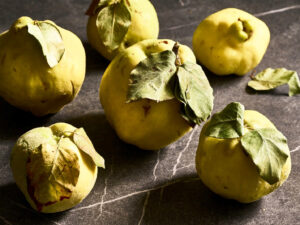

The fruit of love and abundance In ancient Greece, the quince was not just a fruit; it was a symbol of love, fertility, and prosperity. Originating from the region of Kydonia in Crete (now Chania), it acquired its name and became part of the mythology, religion, and diet of the ancient Greeks.
The ancients called quinces “quince apples” and associated them with Aphrodite, the goddess of love and beauty. In wedding ceremonies, the bride had to bite into a quince before entering the bridal chamber so that her breath would be sweet and the marriage would begin happily. Plutarch mentions that quince was essential to wedding ceremonies, symbolising the couple’s fertility and tenderness.
In gastronomy Quinces were known for their tart taste when eaten raw, but the ancients softened them by honeying or boiling them. Athenaeus in Deipnosophists mentions preparations of quinces with honey and wine. They were used in porridges and sweets, but also as a base for aromatic wines. They were also a valuable ingredient in food preservation due to their natural pectin.
Quince also had a place in religious contexts: It was offered in ceremonies in honour of Aphrodite and other deities. Citizens saw it as a fruit of abundance, bringing health and good luck. From antiquity to modern tradition The reputation of the quince spread to the Romans, who praised it for its aromatic and healing properties. Later, in the Byzantine and medieval periods, quinces became the basis for the well-known “kydonopasto” or marmalade, which was the precursor to jam.
Quince is not just a seasonal fruit; it is a fruit with history, myth, and tradition that connects ancient Greek cuisine with modern gastronomy. From Aphrodite’s bridal chamber to today’s spoon sweets, quince retains its glamour as a symbol of love, sweetness and abundance.