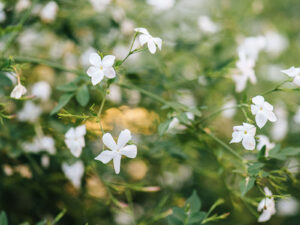

There are scents that are never forgotten; just a gentle breeze is enough to awaken memories and emotions. Jasmine is one of those flowers: white, delicate, with a fragrance that travels and embraces the senses. Throughout the Mediterranean, jasmine adorns courtyards and balconies, climbs over old stone walls, and offers a feeling of purity and intimacy.
For women, jasmine has always been more than just a flower. In popular tradition, it symbolizes tenderness, fertility, and beauty, while its fragrance has accompanied celebrations, secret summer nights, and evening walks through the narrow streets of the islands. Grandmothers once wove jasmine into wreaths or placed a sprig under the pillow to bring sweet dreams and drive away dark thoughts.
Jasmine also has practical uses: it was boiled to perfume clothes, placed in pitchers of water to freshen summer houses, and remains today a key ingredient in perfumes and essential oils. In many parts of Greece, especially the Dodecanese and the Ionian Islands, jasmine is considered a symbol of hospitality—its presence in the courtyard a sign that the guest is warmly welcome.
A traveler walking down a jasmine-lined alley often feels part of a more personal, feminine narrative—one that connects nature to the soul. For a woman traveler, the sight of jasmine in a Cycladic alleyway or on a balcony filled with clay pots is not just a photograph; it is an experience, a sense of continuity with generations who once adorned their summers with the same fragrance.
Jasmine, then, is not only a flower; it is a journey. It is the feminine path that carries memories and emotions, from traditional villages to the modern island streets. It reminds us that travel is not only about images and landscapes, but also about scents that stay with us and become part of our personal story.