Coins made of electrum first appeared in the late 7th century BC among the Lydians, but it was their adoption by the Greeks that marked a turning point in economic and political life mostly within the Greek world. Coinage was a means for both transactions and symbolic purposes—from offerings to oracles to Charon’s obol for passage across the river to the underworld. The introduction of metal small size coins created a new economic order in which merchants, rather than landowners, became central figures. The agora evolved into a space not only for commercial transactions but also for political decision-making. For almost 1,500 Greek city-states, minting their own coinage became a matter of power, autonomy, and prestige. Each polis used symbols of their pride: mythological figures (Pegasus for Corinth), local emblems (the Athenian owl), or “speaking” symbols (Rhodes with rose) and later on rulers (Philip II and son Alexander the Great) to communicate their identity. Besides, the very word νόμισμα (coin) derives from νόμος (law) and νέμω (to distribute), reflecting a system bound by rules. Within a city-state’s territory, coins guaranteed authenticity, stable value, secure transactions, and a shared cultural identity. Greek cities mainly used silver—hence argyria meaning “money”—while gold was typically stored as wealth. Uniform weight standards ensured reliability across regions. Coinage quickly became a vehicle for economic expansion (public works, wars), enabled maritime trade and supported the establishment of colonies. One of many reasons why Alexander III of Macedon was considered “Great” by his contemporaries was releasing vast quantities of Persian gold into circulation after his conquests. This helped unify the ancient Greek world and facilitated unprecedented movement of goods, people, and ideas across territories. For archaeologists today, coins and coin hoards remain invaluable. Their inscriptions and imagery allow for precise dating of discoveries and offer insights into social structures, political systems, economic practices, religious beliefs, artistic trends, customs, and even the natural environment. Despite their small size, coins contain a vast amount of information that can tell us about human ingenuity, aspiration, legacy, avarice and greed.
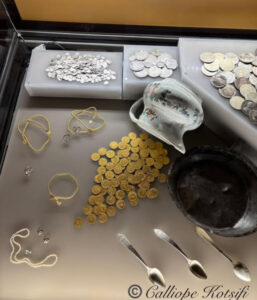
What could ancient coins possibly tell us?